The 1960s: Car Ownership and Grease Guns
In the 1960s, owning a car wasn’t just about driving; it was also about maintenance. When you bought a car back then, it came with a grease gun. Why? Because keeping a car running required regular attention. My father, like many car owners of his generation, spent his weekends in the driveway with his grease gun, applying lubrication to various parts of the vehicle. It wasn’t a hobby; it was a necessity.
Cars of that era weren’t designed to be maintenance-free. Their lubrication systems required regular manual greasing to ensure smooth operation. It didn’t matter if you were a mechanic or a hobbyist; owning a car meant learning the basics of its upkeep. This activity—this skill set—was a cornerstone of car ownership for decades.
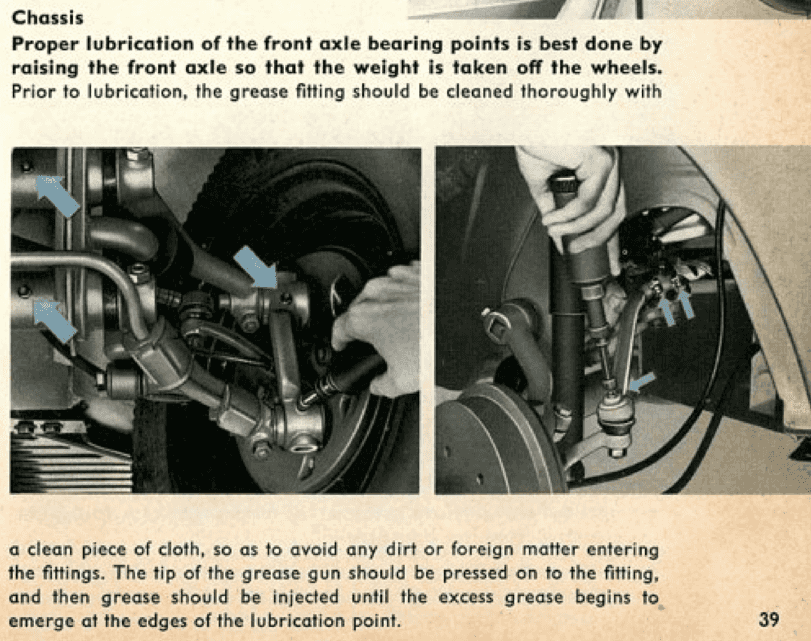
But as engineering advanced, lubrication systems became self-contained and self-sustaining. Cars no longer needed grease guns, and the entire ritual of weekend maintenance faded into history. Mechanics still existed, of course, but the nature of their work shifted to align with the demands of newer technologies.
The 1990s: Computer Networking and My “Grease Gun Moment”
Fast forward to the 1990s, and I had my own grease gun moment. This time, it wasn’t related to cars; it was related to computers and networking. Back then, setting up a home network was a technical challenge. If you wanted to connect multiple devices, you needed to understand networking fundamentals: IP addresses, subnet masks, and address ranges.
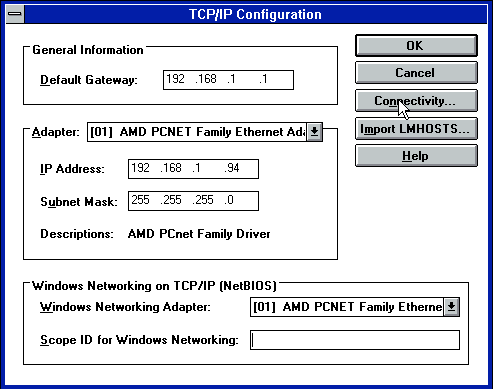
I remember wrestling with newtork configurations, assigning IP addresses like a “Class C” 192.168.1.100 address, and dealing with conflicts when two devices accidentally shared the same address. It was a niche skill set, but it was vital for anyone who wanted a functioning home network. Knowing someone who understood these complexities was often the difference between frustration and success.
Then came the rise of automatic configuration protocols like DHCP. Suddenly, networks could assign IP addresses dynamically, eliminating conflicts and making the process seamless. The specialised knowledge I had painstakingly acquired was no longer necessary. Just like the grease gun, manual network configuration became a thing of the past.
Network engineers didn’t disappear, but their roles evolved. The tasks that had once consumed so much time and effort were replaced by tools and technologies that automated much of the process.
Business Adoption of GenAI: a New “Grease Gun Moment”
I recently attended AWS re:Invent 2024, and believe we are witnessing the beginning of another grease gun moment. This time, the transformation is happening in the world of business specialisations, and the catalyst is generative AI.
One re:Invent workshop stood out for me, titled “Streamlining clinical protocol reviews with Amazon Q Business”3. Amazon Q Business, powered by large language models, allows business users to describe what they need in plain text, and the system builds the solution for them. The workshop I participtaed in involved creating a clinical trial protocol for a hypothetical pharmaceutical company.

Traditionally, this process would have required detailed business requirements, extensive documentation review, collaboration between domain specialists, and significant time. But with Amazon Q Business, workshop participants described the requirements using text-based prompts, referenced a set of previous clinical studies, and the system generated a clinical protocol specification on the fly.
This seems to be a grease gun moment for many business specialisations. Tools like Amazon Q Business are likely to eliminate the need for certain skills that were once essential. The ability to manually translate business needs into technical specifications and documentation may soon be as obsolete as greasing car parts or manually configuring IP addresses.
Wrapping Up
Generative AI and tools like Amazon Q Business seem likely to democratise access to complex processes and specialist domain knowledge, enabling more people to achieve results without needing deep domain expertise.
Like mechanics and network engineers, the professionals affected by this change won’t disappear. Their roles will evolve, becoming more specialised and focused on areas that machines cannot yet handle. The underlying need won’t disappear— it will just get delivered through systems that require less human intervention.